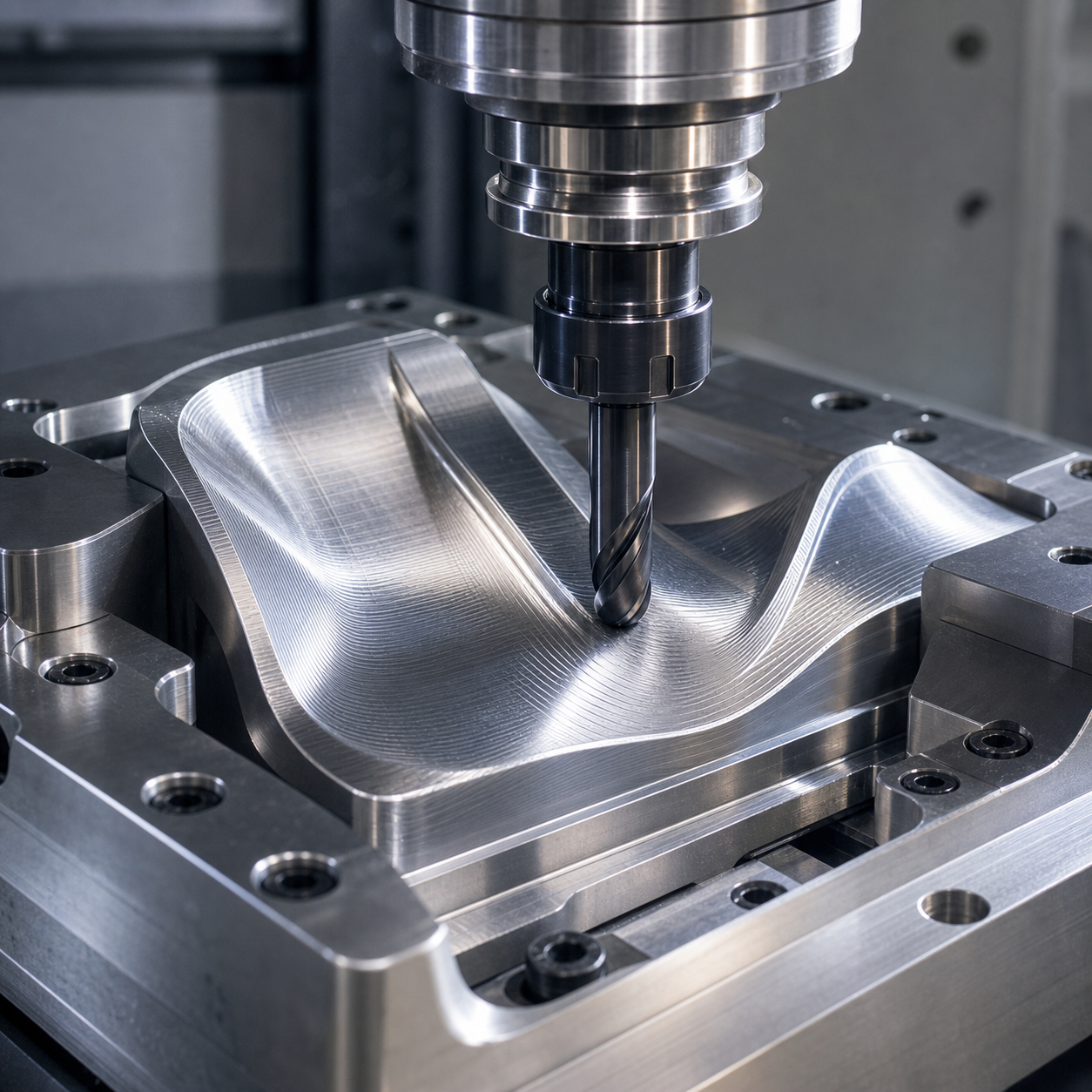
SEO focus keywords: 3D contour CNC machining, ball nose end mill, step-over, surface finish control, cusp height, precision finishing.
English: Step-Over Controls the Final Surface
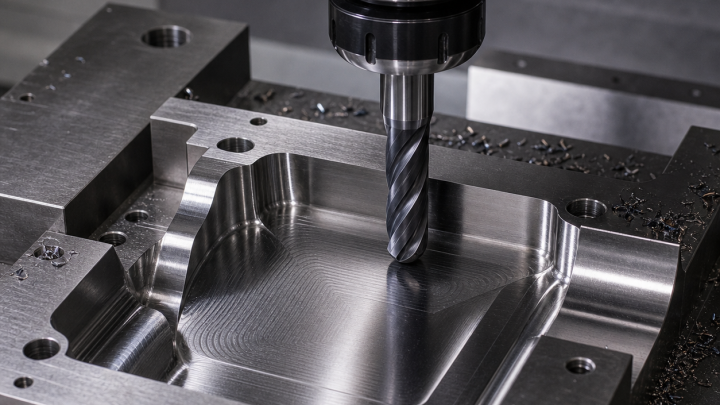
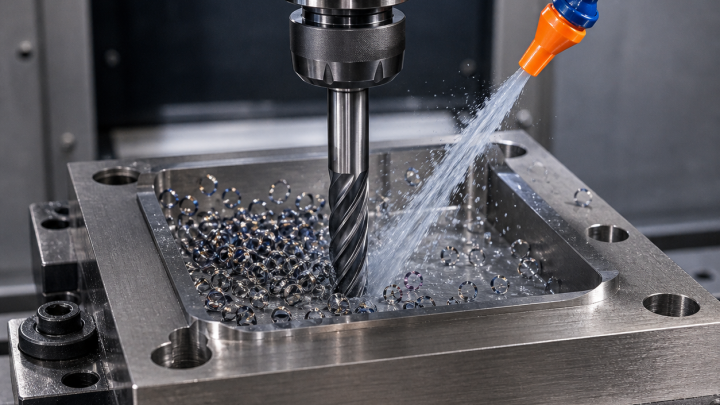
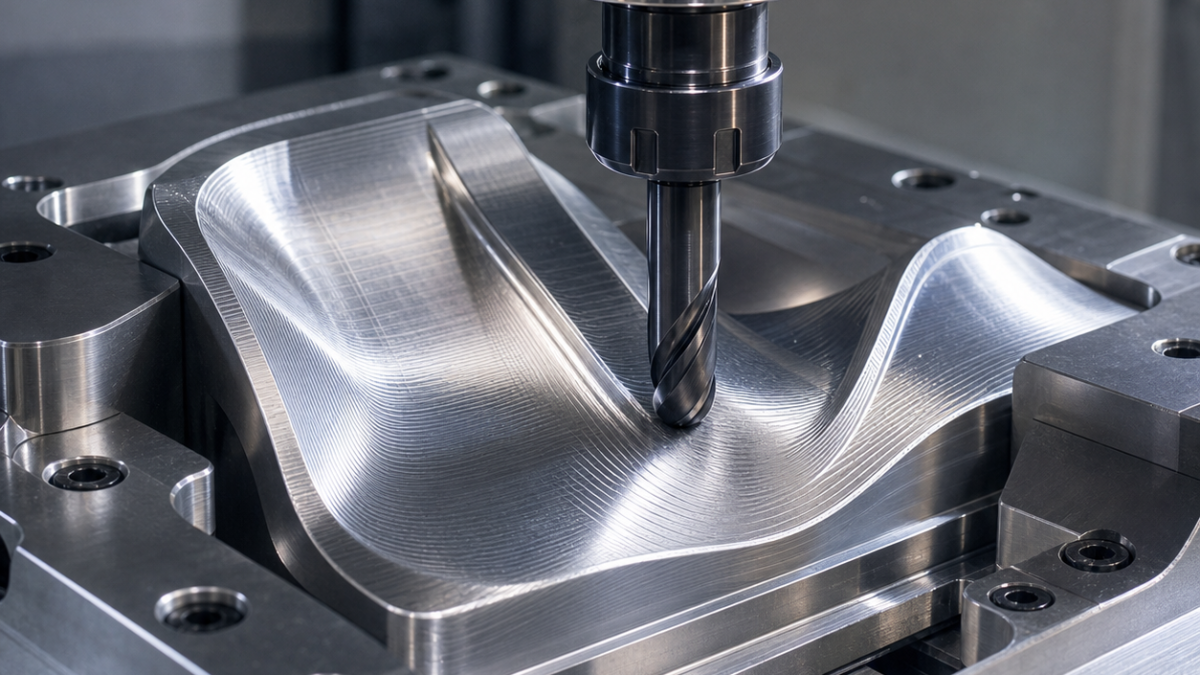
3D contour CNC machining depends heavily on the relationship between ball nose end mill radius, step-over and surface finish target. A smaller step-over reduces cusp height and improves the visual finish, but it also increases machining time. The best process balances surface requirement, tool life and production efficiency.
Toolpath direction matters on curved surfaces. Climb milling can improve finish in many cases, while consistent engagement helps prevent vibration and witness marks. Programmers should choose finishing strategies that keep the tool in smooth motion and avoid abrupt changes in contact angle.
Improving 3D finishing results
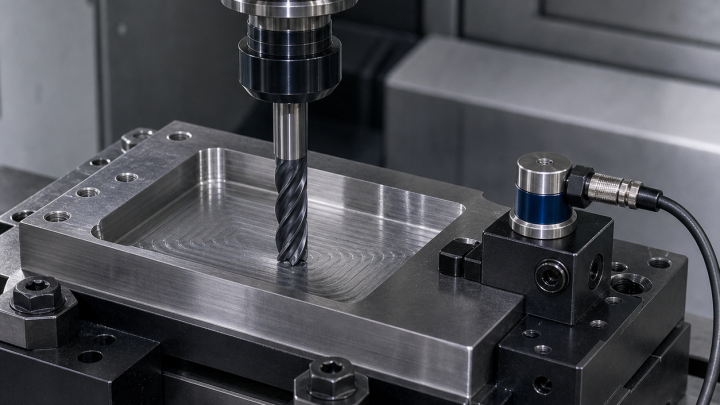
Use a rigid holder, measure runout and inspect the ball nose cutting edge before finishing critical surfaces. For molds and aerospace-style parts, a stable semi-finishing pass can leave uniform stock for the final toolpath, making the last cut more predictable.
中文:3D 曲面 CNC 加工中的步距与表面质量
3D 曲面 CNC 加工的表面效果,很大程度取决于球头铣刀半径、横向步距和目标粗糙度之间的关系。较小步距可以降低残留高度并改善表面观感,但会增加加工时间。合理工艺需要在表面要求、刀具寿命和效率之间平衡。
曲面加工中刀路方向同样重要。顺铣通常有利于改善表面,稳定切削参与可以减少振纹和接刀痕。编程时应让刀具运动平顺,避免接触角突然变化。
Français : Finition 3D avec fraise boule
En usinage 3D, le pas latéral d’une fraise boule détermine la hauteur de crête et l’état de surface. Un pas plus faible améliore la finition mais augmente le temps d’usinage. Une passe de semi-finition stable aide à obtenir une finition plus régulière.
Русский: 3D-контурная CNC-обработка шаровой фрезой
При 3D-контурной обработке шаг между проходами влияет на остаточную высоту и качество поверхности. Меньший шаг улучшает поверхность, но увеличивает время обработки. Стабильная траектория и равномерный припуск делают финальный проход более надежным.